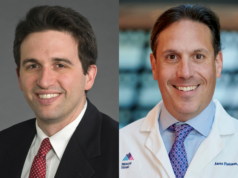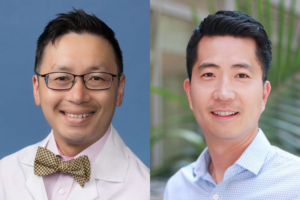
Jason Chiang and Kyung Sung of the department of radiological sciences at the David Geffen School of Medicine at the University of California, Los Angeles (UCLA) and the UCLA Health Jonsson Comprehensive Cancer Center have received a US$3.2 million, five-year grant from the National Cancer Institute (NCI) to develop an artificial intelligence (AI)-enhanced imaging platform designed to improve yttrium-90 (Y-90) radioembolization planning for patients with liver cancer.
A recent press release has illustrated that, before treatment with Y-90, clinicians use imaging to estimate where the Y-90 microspheres will travel inside the liver and tumour. However, current methods cannot fully capture the complex and often unpredictable blood flow within tumours, making it difficult to accurately predict how the beads will distribute during treatment.
To address this challenge, Chiang, a physician-scientist who is also a member of the UCLA Broad Stem Cell Research Center, and Sung, an expert in AI and magnetic resonance imaging (MRI), are leading the research team to develop an AI-enhanced imaging approach that uses special dynamic contrast-enhanced (DCE)-MRI scans to better characterise tumour blood flow and predict how Y-90 microspheres distribute within liver tumours.
The new NCI funding will support the development and validation of the AI platform to optimize Y-90 radioembolization treatment planning. Using specialised hepatic vascular phantoms, the team will first evaluate how Y-90 microsphere distribution is affected by arterial flow pattern, catheter position and tumour vascularity. These phantom models will allow investigators to train and validate computational tools linking perfusion patterns derived from DCE-MRI scans to the Y-90 microsphere density. The validation process will then be extended to large animal liver tumour models using clinically relevant MRI scanners and imaging protocols.
“By combining advanced MRI techniques with artificial intelligence, we hope to better predict how Y-90 microspheres distribute within liver tumours and improve the precision of radioembolization therapy,” said Chiang. “This work has the potential to optimize treatment effectiveness, reduce unintended