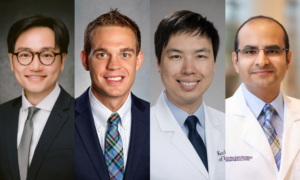
After-hours and weekend interventional radiology (IR) procedures may be associated with more severe adverse events, but severity alone does not tell the whole story. Gavin Wu (Columbus, USA), Jeffrey Forris Beecham Chick (Los Angeles, USA), David S Shin (Los Angeles, USA), and Mina S Makary (Columbus, USA) discuss why higher adverse event severity during after-hours and weekend procedures should be interpreted in the context of patient acuity, procedural urgency, and opportunities for system-level quality improvement.
IR has become an essential component of acute hospital care. Presentation of emergent conditions, such as traumatic haemorrhage and gastrointestinal bleeding, does not adhere to routine weekday schedules. Despite the critical role of IR in after-hours care, limited data exist regarding whether procedure timing is associated with differences in adverse event severity.
To explore this question, a multi-institutional review of 547 adverse events reviewed at IR morbidity and mortality conferences was conducted. Adverse events occurring after hours and on weekends were more likely to be associated with higher-severity outcomes, including death, than those occurring during routine weekday daytime hours.
At first glance, these findings appear consistent with the broader “weekend effect” described across other medical specialties. However, the more important observation may be what did not differ: quality-of-care assessment scores were not significantly different among weekday daytime, weekday after-hours, and weekend procedures. In other words, although adverse events occurring after hours and on weekends were associated with greater severity, including higher mortality, the case review results did not demonstrate a corresponding decline in the quality of care delivered.
This distinction is crucial. In IR, procedures performed outside routine working hours are rarely elective; instead, they are typically undertaken for urgent or emergent indications in critically ill patients. For example, a weekend embolization for a patient in haemorrhagic shock or an after-hours drainage for a patient in septic shock should not be interpreted in the same context as an elective daytime procedure. Accordingly, the greater severity of adverse events observed after hours and on weekends may reflect higher patient acuity and clinical urgency rather than a decline in the quality of procedural care.
The next step is not to avoid after-hours IR, but to study it more rigorously. Future quality improvement initiatives should move beyond adverse event review alone by incorporating overall procedural volume, standardised measures of adverse event severity, objective characterisation of patient acuity, and systems-level assessment of factors such as staffing, provider fatigue, and anaesthesia support. Indeed, as the practice and scope of IR continues to expand, so does the need to better understand how outcomes differ when procedures are performed outside of regular working hours.
Gavin Wu is a graduate of the Ohio State University College of Medicine in Columbus, USA and an incoming IR resident at the University of Pennsylvania in Philadelphia, USA; Jeffrey Chick and David Shin are interventional radiologists at the University of Southern California in Los Angeles, USA; and Mina Makary is an interventional radiologist at The Ohio State University Wexner Medical Center in Columbus, USA.