The management of acute pulmonary embolism (PE) is undergoing a meaningful transformation. Following the release of several pivotal datasets, co-global principal investigator and professor of radiology and surgery at the Icahn School of Medicine at Mount Sinai (New York, USA) Robert Lookstein plots an evidence-based trajectory for endovascular PE therapy.
For years, endovascular therapy occupied an uneasy space between physiologic logic and incomplete clinical evidence. Interventionalists could see, often immediately, that catheter-based therapy improved pulmonary artery obstruction, right ventricular strain, oxygenation, and patient haemodynamics. Yet, the broader clinical community reasonably asked whether these improvements translated into patient-centred outcomes.
Recent randomised trials now provide an increasingly persuasive answer: in carefully selected patients with intermediate-high-risk PE, endovascular therapy can meaningfully improve early clinical trajectory and may prevent deterioration.
The field should therefore move beyond the outdated binary debate of “anticoagulation versus intervention” and toward a more sophisticated framework: which PE patients are most likely to benefit from timely, targeted reperfusion? Low-risk PE remains appropriately managed with anticoagulation, risk-adjusted disposition, and follow-up. Massive or high-risk PE with shock remains a reperfusion emergency. The most important evolving population is intermediate-high-risk PE: patients who are normotensive but demonstrate right ventricular dysfunction, biomarker elevation, hypoxaemia, tachycardia, syncope, or limited cardiopulmonary reserve.
Earlier trials established proof of biologic effect. ULTIMA showed that ultrasound-assisted catheter-directed thrombolysis improved right ventricle/ left ventricle (RV/LV) ratio compared with anticoagulation alone. CANARY, although prematurely terminated, similarly suggested improved right ventricular recovery with conventional catheter-directed thrombolysis and a low major bleeding signal. These studies were important, but they largely centred on imaging and physiologic endpoints.
“The evidence no longer supports viewing catheter-based intervention as merely experimental, anecdotal, or reserved only for last-ditch rescue”
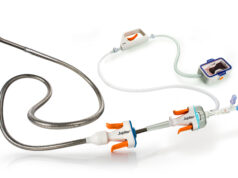
The newer trials are more consequential because they move the field closer to clinical relevance. STORM-PE randomised patients with intermediate-high-risk PE to computer-assisted vacuum thrombectomy plus anticoagulation versus anticoagulation alone. The thrombectomy strategy produced greater early reduction in RV/LV ratio, greater reduction in pulmonary obstruction, and more rapid normalisation of vital signs. This is not trivial. In acute PE, early right ventricular recovery and stabilisation of vital signs are clinically meaningful because the central threat is RV failure. Although STORM-PE was not powered to demonstrate a mortality advantage, it provides randomised evidence that mechanical thrombectomy can rapidly improve the pathophysiology that drives PE decompensation, without an obvious major safety penalty in the studied population.
HI-PEITHO is another very important clinical trial. In patients with acute intermediate-risk PE and additional severity features, ultrasound-facilitated catheter-directed fibrinolysis plus anticoagulation reduced the seven-day composite of PE-related death, cardiorespiratory decompensation or collapse, or symptomatic recurrent PE compared with anticoagulation alone. The benefit was driven primarily by reduction in clinical decompensation or collapse. That finding matters enormously. Mortality in intermediate-risk PE trials is often low, making death alone an insensitive endpoint. Preventing deterioration, escalation, shock, rescue therapy, and collapse is a clinically meaningful therapeutic goal. HI-PEITHO supports the idea that early catheter-directed therapy can alter the natural history of selected intermediate-risk PE before patients cross the threshold into overt haemodynamic failure.
Taken together, these trials justify a more confident posture toward endovascular PE therapy. The evidence no longer supports viewing catheter-based intervention as merely experimental, anecdotal, or reserved only for last-ditch rescue. In the appropriate patient, endovascular therapy is becoming a legitimate early treatment strategy designed to unload the RV, stabilise physiology, reduce decompensation, and accelerate recovery. This does not mean every intermediate-risk PE requires intervention. It does mean that patients with clear intermediate-high-risk features deserve timely multidisciplinary evaluation and that catheter therapy should be considered proactively rather than only after clinical collapse.
The next challenge is implementation. Endovascular PE therapy should include rapid diagnosis, standardised RV assessment, biomarker interpretation, bleeding risk assessment, pulmonary embolism response team (PERT) activation, and follow-up. Intervention should be selected based on clinical phenotype, not clot burden alone. A saddle embolus in a stable patient is not the same as segmental-level clot burden in a patient with severe hypoxemia, rising biomarkers, RV dysfunction, syncope, and poor reserve. The decision should be physiologic, not purely anatomic.
The field also needs continued investigation. Future trials such as PE-TRACT will evaluate functional recovery, quality of life, and chronic thromboembolic disease, among other factors. Mortality will remain important, but it should not be the only measure of success in a disease where the central clinical objective is often prevention of deterioration.
Endovascular therapy for acute PE has reached an inflection point. STORM-PE strengthens the case for mechanical thrombectomy as a rapid, non-lytic strategy for improving right ventricular strain and physiologic instability. HI-PEITHO provides randomised clinical endpoint evidence that catheter-directed fibrinolysis can reduce early decompensation in selected intermediate-risk patients. These data do not eliminate the need for judgment; they elevate the importance of judgment. The most effective PE programmes will be those that identify the right patient early, match the intervention to the clinical problem, and act before RV failure becomes irreversible.
The message is no longer simply that endovascular PE therapy is promising. The emerging message is that, when applied selectively and systematically, it is becoming an evidence-based tool for preventing deterioration and improving early recovery in a high-risk subset of patients who historically had few options between anticoagulation and crisis-driven rescue.
Robert Lookstein is a professor of radiology and surgery at the Icahn School of Medicine at Mount Sinai in New York, USA.
The author declared that he is principal investigator for the Penumbra-sponsored STORM-PE trial.