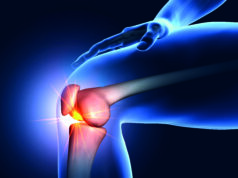
A new Society of Interventional Radiology (SIR) position statement has sought to provide evidence-based support for the use of genicular artery embolization (GAE) as a minimally invasive treatment option for patients with symptomatic knee osteoarthritis (KOA). Following its publication in the Journal of Vascular and Interventional Radiology (JVIR), co-authors Osman Ahmed (Joint and Vascular Institute, Libertyville, USA) and Jafar Golzarian (North Star Vascular and Interventional, Minneapolis, USA) unpick central tenets of the statement and their significance in today’s clinical landscape.
Before GAE, what treatments were available for KOA? Did GAE fill a gap for this condition?
JG: [Before GAE] interventional radiology (IR) had little to offer. Centres would sometimes offer aspiration or perform corticosteroid injections and perhaps nerve ablation, but before embolization, our only access to knee intervention was post-surgical total knee replacement bleeding and haemarthrosis.
OA: Prior to now, most interventional radiologists were not treating KOA. While we have the ability and expertise to do so, only a small percentage did. Most clinicians treating KOA were performing nerve ablation or cryoneurolysis to manage pain, which allowed us to breach the threshold into embolization for a wider set of indications such as musculoskeletal intervention.
How does the position statement define the ‘optimal patient’ for GAE?
JG: The statement suggests that the ideal candidates are patients who have failed conservative management and are either poor surgical candidates or would prefer not to undergo surgery. However, I would push the envelope on this concept a bit further.
One of our recommendations was based on data which demonstrated that GAE provides over two years of stability and improvement of symptoms. And so, in patients who are good candidates for surgery but would like to postpone, GAE is an option.
We know that surgery is associated with continuous pain in up to 20% of the patients after the procedure and the lifespan of a knee replacement is about 15 years. Can we postpone surgery with GAE so the patient will undergo only one surgical procedure in their lifetime? That was a key discussion point when putting together the statement.
OA: There’s a huge treatment gap and, right now, for better or worse, we have a relatively broad indication for GAE which really tries to bridge the gap between conservative management and surgery. We have a lot to offer patients, and I think the statement does acknowledge that there’s a tremendous amount of work that needs to be done to further refine patient characteristics that indicate whether they will be a good candidate for GAE or not.
How does the statement handle cost-effectiveness debates regarding durability of benefit and repeatability of treatment?
OA: We recently published on cost-effectiveness, although not directly comparing knee replacement to GAE, but to other ‘competing’ (and I’ll use air quotes here as they’re not really competing) treatments.
Patients with arthritis will largely end up receiving every available intervention at some point because it’s an incurable disease. I think criticism of IR in general, not just with GAE specifically, is, ‘Hey, your procedures are expensive because they require a lot of fancy equipment and a lot of technical skill’, but that’s a one-time upfront cost.
So, in our analysis, we demonstrated that, while you may be paying more initially, this amount is spread across the two to four years of symptom improvement, as Golzarian previously mentioned. That cost is very low as opposed to steroid injections, which are cheap but must be administered at the hospital every three months, incurring several additional costs. Ultimately, we did find that GAE and radiofrequency ablation (RFA) was more cost effective than steroid injections.
What is the learning curve for GAE in KOA? What experience must an interventionist have to adequately perform this treatment?
JG: Do you want the correct answer or the politically correct answer?
Either way, it’s important for the SIR to release this statement as the skills required to perform GAE are intrinsic to IR training. For any new procedure there is always a learning curve, but the learning curve for an experienced interventional radiologist is different to that of someone who is doing knee arthroscopy and wants to perform embolization.
In general, I would say it’s a technique that is totally accessible to interventional radiologists. An understanding of catheterisation of small vessels is essential, however. The genicular arteries can be challenging which may require additional time during the initial stages of the procedure.
If you are interested in performing GAE, I recommend watching it being performed—try to learn about anatomy, read publications, go to meetings and talk about it.
OA: The godfather of embolization [Golzarian] said it perfectly, but I would emphasise that every procedure is a risk. This is an elective procedure for benign disease where there are multiple options, and so our risk is that the tolerance threshold for complications is very, very low. Risk to the patient should be close to zero. So, those performing GAE should be very comfortable with embolization.
“Can we postpone surgery with GAE so the patient will undergo only one surgical procedure in their lifetime?” – Jafar Golzarian
What prior methodological limitations does the position statement address?
OA: Methodologically, for new procedures or innovations, studies always start in a similar fashion. You’re always going to start with an early feasibility study to say, ‘Hey is what we’re doing safe?’ And once you know it’s safe, you ask, ‘Well then, how effective is it?’
In our specialty—for better or worse—we conduct a lot of retrospective studies and then that evolves into prospective, single-centre trials, which develop into level-one evidence in randomised controlled trials. The aim then is to get into guidelines.
GAE has generated a lot of data and evidence which is why we have issued this position statement. We’re now entering a new phase in pursuit of bigger studies, but the difficulty that we encounter now is due to many of our device uses being off label. So, if we wanted to conduct a retrospective paper prospectively, we would need to receive US Food and Drug Administration (FDA) investigational device exemption status, and that takes a significant amount of time and money.
JG: This is a prevalent limitation in our field, as legal approval of devices always lags behind the speed of innovation.
How does the placebo effect play into research into GAE for this patient population?
OA: Research concerning pain is very complex. It’s not something we can objectively measure and relies on patient perception and reporting. This is where the placebo effect comes up.
JG: Academic—as well as philosophical—debates have contested whether a sham study is necessary or beneficial in a trial setting. A recently published commentary by Tijmen A van Zadelhoff et al titled ‘Genicular artery embolization for knee osteoarthritis: When the hype doesn’t match the evidence’ described that placebo groups in a series of trials have reported significant improvement in symptoms, and we don’t know why. The complicating factor is that, when you look at data on corticosteroid injection, for example, you may find two positive and three negative studies with placebo controls of those.
I believe that the real-world data we have [for GAE] compared to the success of conventional therapy are much more valuable.
OA: I don’t think a negative placebo or sham study is a death sentence [for any intervention]. Even regarding steroid injections, there are a mix of negative and positive studies, so ultimately it only speaks to how difficult these studies are to conduct in this space.