An international panel of experts has released two Delphi consensus statements for liver tumour thermal ablation, outlining procedural and practice standards, as well as margin assessment. The results were published in The Lancet Oncology.
Concerning the former, key takeaways include prioritisation of the least invasive approach—typically percutaneous, while margin adequacy is reaffirmed as the principal technical goal. Insights from the latter document outline that margins should be assessed quantitatively in three dimensions with contrast-enhanced computed tomography (CT) or magnetic-resonance imaging (MRI), preferably intraprocedurally with ablation confirmation software.
The consensus was initiated by co-principal investigators Bruno Odisio (MD Anderson Cancer Center, Houston, USA) and Reto Bale (Medizinische Universität Innsbruck, Innsbruck, Austria) who appointed a steering committee which also included Iwan Paolucci (UT MD Anderson, Houston, USA), Grego Laimer (Medizinische Universität Innsbruck, Innsbruck, Austria), Edward Johnston (Royal Marsden Hospital, London, UK), and Christiaan Overduin (Radboud University Medical Centre, Nijmegen, Netherlands).
To develop the consensus, 72 global experts were engaged during three iterative rounds of Delphi scoring across 135 statements relating to procedural and practice standards, and 199 statements relating to margin assessment between June and December 2024.
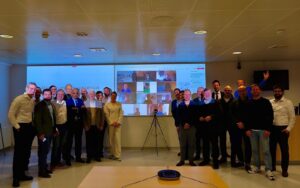
The initiative was held both in-person in Innsbruck, Austria and online, to support the attendance of specialists “from every continent”, said Odisio speaking to Interventional News alongside Bale ahead of the release of the consensus papers. “It was touching to see everyone come together,” Odisio continued. “There’s motivation—there is desire to improve local tumour control and success rates with ablation, but there isn’t a roadmap for how we can implement that in clinical practice, and that was the main incentive.” As Bale added: “[The initiative] is all about standardisation and reliability.”
In the first paper, consensus was achieved for 94 (70%) of 135 statements, while the second achieved consensus for 150 (75%) of 199 statements. The authors add that strong consensus was observed between interventional radiologists and surgical oncologists—who were actively involved with the initiative—with only 12 (6%) of the 199 statements showing significantly different ratings.
Among key points of consensus in practice standards were organ displacement techniques, which were endorsed to maintain safety and expand treatable indications when performing liver tumour thermal ablation, and the assertion that complex ablations should only be performed by experienced operators (more than 100 previous cases). For margin assessment, participants agreed that margins should be assessed and documented for every treated tumour and categorised as A0 (tumour completely covered with sufficient margin), A1 (tumour completely covered but insufficient margin), or A2 (portion of tumour remains unablated).
Concerning practice standards, consensus was not reached on statements covering: the minimum number of cases required before independently performing liver tumour thermal ablation; the appropriateness of offering thermal ablation if the tumour cannot be completely covered by the ablation zone; whether the use of coaxial or non-coaxial needles affects case complexity; and, if the operator experience should directly influence selection of ablation settings, among others.
In the second paper, consensus was reached on the need for standardised methodology and outcome reporting in scientific studies focusing on ablation margin assessment, while statements relating to the maximum time between preprocedural imaging and ablation did not. Elsewhere, consensus was not reached on whether sufficient evidence exists to define a minimum ablation margin threshold for non-colorectal liver metastases or the acceptable increase in procedural time to perform ablation margin assessment.
Bale, on why 100% consensus was not reached, stated: “I sense that insufficient evidence [at the time], or the now emergent evidence base following the publication of the COVER-ALL and COLLISION trials, is what left experts relying on opinion rather than data across several statements,” he said. “This, as well as conceptual disagreement on how to define some of the core terms, such as case difficulty and ablatability, which made clear that future research should focus on the definition of such terms.”
In Odisio’s view, the consensus papers sit alongside recent evidence, bolstering the position of thermal ablation for liver tumours, providing a guide to implementing the technique within practice. “It’s a document that can demonstrate the necessary steps to achieve the same results that are being published with very high rates of local tumour control,” said Odisio.
“It’s also a document that will guide us in the next steps in terms of research, to better understand the role of locoregional therapy for patients regarding how local therapy with curative intent could potentially have systemic effects,” Odisio continued.
Both Bale and Odisio comment that the consensus papers seek to “democratise” ablation across centres internationally; however, they acknowledge heterogeneous access to the latest technology across hospitals due to funding can affect outcomes.
“This is very important. As a pragmatic interim approach, the use of image fusion with manual quantitative minimum ablation margin assessment, which was not explicitly included in the questions, was endorsed,” stated Bale. “Image fusion software is available on many standard scanners, and these have been shown to improve local tumour control when compared with side-by-side comparisons.”
Odisio explained that, during the consensus meetings, this point was carefully considered. “It’s a difference between enforcing or advising the use of a technology. For instance, we had a consensus recommendation on the use of ablation confirmation software given the data we have right now, but we understand that the adoption of that software might be gradual,” he said. “Finance availability is an element that needs to be taken in consideration here, so we also provide alternatives in our discussion to show that, even if you don’t have ablation confirmation software, there are still tools available that can help you progress. The statements create a roadmap, but, at the same time, balance constraints.”
The guidelines are endorsed by the European Society of Surgical Oncology (ESSO), the Cardiovascular and Interventional Radiological Society of Europe (CIRSE), and the Society of Interventional Oncology (SIO).