Reflow Medical has announced that the Medical University of Graz (Graz, Austria) has enrolled the first patient in the DEEPER CHALLENGE clinical trial.
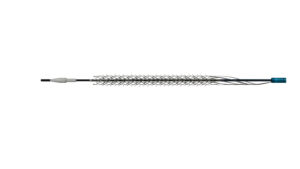
The investigator-initiated, single-centre, single-arm, prospective study, supported by a grant, investigates early vessel recoil following below-the-knee treatment using the Spur peripheral retrievable scaffold system in combination with a commercially available drug-coated balloon (DCB).
The study plans to enrol up to 40 patients with chronic limb-threatening ischemia (CLTI) across two distinct cohorts: patients with diabetes and patients with end-stage renal disease (ESRD) receiving haemodialysis for at least six months, with women comprising no less than 50% of each cohort.
The study aims for a better understanding of the mechanical response of vessels immediately following treatment in patient populations that often experience complex lesion morphology and higher rates of restenosis. The primary endpoint is early vessel recoil, assessed by angiography within 15 minutes after treatment. Secondary endpoints include major adverse limb events, mortality, and reintervention outcomes through 12 months, and haemodynamic outcomes through 30 days.
“This study is an important step in understanding early vessel recoil in challenging below-the-knee interventions,” said Katharina Kurzmann-Gütl, principal investigator at the Medical University of Graz. “By focusing on selective patient cohorts and ensuring balanced female representation, this research aims to generate data that more accurately reflects the clinical realities of treating complex peripheral artery disease.”
“Patients with end-stage kidney disease or diabetes are often underrepresented in CLTI studies, despite facing higher risks of restenosis and limb-threatening ischaemia, while females are underrepresented in most medical studies,” added Marianne Brodmann, co-investigator and Head of the Division of Angiology at the Medical University of Graz. “This study’s specific inclusion criteria and focus on early vessel recoil will provide insights into the vessel’s immediate mechanical response after endovascular therapy.”
“We are pleased to support this investigator-initiated study led by the Medical University of Graz, which addresses important questions in below-the-knee disease,” said Dejan Ilic, vice president of global marketing at Reflow Medical. “The study reflects our continued commitment to collaborating with physicians to advance clinically driven research in high-risk patient populations.”