This advertorial, sponsored by Bentley, is only available in selected countries and geographies. [geoip-content not_country=”US”]

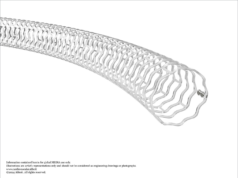
The story of iliac stenting in patients with TASC C and D lesions is one of evolution. From traditional self-expanding, bare metal stents to modern covered devices, the field has witnessed several new technologies in the course of its history, each designed to hone the treatment of complex iliac occlusive disease. A new dedicated iliac covered stent—the BeFlow (Bentley)—opens the latest chapter, promising an evidence-backed, economically sound solution. Here, one expert shares their clinical experience with the device in the context of a dynamic disease landscape, shifting practice patterns, and strict health economic parameters.
Raghu Lakshminarayan (Hull University Teaching Hospitals NHS Trust, Hull, UK) has extensive experience treating complex iliac occlusive disease. Fifteen years ago, he recalls, the placement of an uncovered self-expanding or—less frequently— balloon-expandable stent was commonplace, based on evidence showing that their use decreased the incidence of distal embolisation in occlusive disease.
Bare-metal stents were not without their limitations, however. For instance, Lakshminarayan shares that the positioning of a self-expanding stent was “quite difficult” for early operators. “There was a long learning curve in order to precisely position them,” he states. Cost was also an issue, with stenting being a more expensive option than plain balloon angioplasty.
Lakshminarayan notes that his go-to treatment algorithm has changed significantly over the past 10 to 15 years. One of the main reasons for this, he explains, is that the complexity of disease he sees on a day-to-day basis has changed over time. “The kind of disease that we used to treat 15 years back was different. We used to treat a lot of claudicants; nowadays, we’re treating severe forms of chronic limb-threatening ischaemia,” he says.
According to Lakshminarayan, the limitations of uncovered stents, combined with the increasing complexity of the disease state in question, warranted new technologies.
Covered stents have shown promise here. The COBEST trial, for example, showed that covered stents performed better than uncovered stents in TASC C and D lesions. Patency rates were 82.1% vs. 70.9% at two years, 79.9% vs. 63% at four years, and 74.7% vs. 62% at five years for covered and uncovered stents, respectively. Covered stents were also associated with fewer revascularisations for TASC C and D lesions than uncovered stents.
There is still work to be done, however, with Lakshminarayan referencing the European Society for Vascular Surgery (ESVS) guidelines to illustrate a data gap. These guidelines include a IIb recommendation for the use of covered stents in TASC C and D lesions, indicating weak or conditional evidence. “The bottom line is we still require a lot more work on this,” Lakshminarayan comments.
Further data are forthcoming, with Lakshminarayan referencing the EVOCC trial in the UK as an important case in point. This randomised controlled trial will assess the clinical and cost-effectiveness of endovascular versus open revascularisation in severe aortoiliac occlusive disease. EVOCC is set to randomise 628 patients at several centres in the UK, including Lakshminarayan’s in Hull.
Lakshminarayan goes on to highlight the importance of gathering further data on covered stents, particularly to demonstrate their cost-effective potential. “The major obstacle to using covered stents is cost, and what we need to demonstrate is that upfront cost might reduce reintervention rates, and therefore even if you have higher costs in the beginning, in the long term the technology will be economically beneficial,” he says.
“If cost was not an issue, then I think whenever somebody was going to use a particular kind of stent, they would use consider using a covered stent,” Lakshminarayan posits. “But having said that, the evidence is still limited, and we need to gather more data.”
There are signals in the literature that future research will point to the benefits of covered stents. Lakshminarayan mentions the DISCOVER trial, for example, which looked at reintervention rates following the use of covered and uncovered stents. In this trial, freedom from reintervention was not significantly different between the two groups overall, but in a subset of patients with moderate and heavy calcification—a disease state Lakshminarayan reiterates is becoming more common—the researchers found a signal that reintervention and restenosis rates were higher in the uncovered stent group.
Lakshminarayan remarks: “If somehow we can present the upfront cost of a covered stent as something that will deliver durability and decrease reinterventions, based on robust evidence, I think that would be very useful.”
As for Lakshminarayan’s current treatment algorithm, this focuses almost exclusively on covered stents—during the covered endovascular reconstruction of aortic bifurcation (CERAB) procedure for aortoiliac disease; for occlusive TASC C and D lesions, for fresh plaque or lesions that have been recently embolised, and for long occlusive lesions or dissections.
BeFlow, launched earlier this year at the Leipzig Interventional Course (LINC 2025; 28–30 January, Leipzig, Germany), has become a key part of this treatment algorithm.
“I have been using covered stents for complex iliac procedures for a very long time, but only for very complex (TASC C and D) cases,” he says. “Now, with the BeFlow, which gives me more liberties within my budget, I’m increasingly also using covered stents in less complex cases, because I believe in the better long-term outcomes and like the safety and delivery a covered stent gives me in relation to distal embolisations.”
BeFlow has been positioned as a dedicated iliac solution that is more economically accessible than some other covered stent options, which Lakshminarayan points out is of crucial importance in today’s healthcare environment.
“Aortoiliac disease is quite a significant component of the treatment of peripheral arterial disease, so having a stent that is positioned for treating the iliac arteries is very useful,” he says. Lakshminarayan goes on to note that BeFlow closes a gap between clinical requirements and economic needs.
Looking ahead, Lakshminarayan is of the opinion that innovation will continue in this area. “We need a lot of tools in our kit because of the increasing complexity of patients with iliac disease,” he stresses, pointing to calcium modification techniques among several other future advances.
Sharing a message to younger vascular specialists about choosing the right stent for the right lesion, Lakshminarayan homes in on the importance of a long-term solution. “A good completion angiogram is not necessarily a durable solution,” he says. “Please do keep in mind the durability of the solution over a long period of time, and try and do the best that you can to provide the patient a good long-term outcome, and in that respect, considering a covered stents is a good idea.”
[/geoip-content]