This advertorial, sponsored by Reflow Medical, is only available in selected countries and geographies.
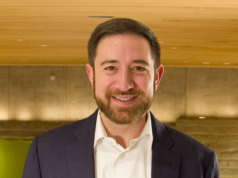
Detailing his evolving treatment algorithm for complex below-the-knee (BTK) disease in patients with chronic limb-threatening ischaemia (CLTI), interventional radiologist Daniel van den Heuvel (St Antonius Hospital, Nieuwegein, Netherlands) discusses patency rates, lesion preparation strategies and what’s on the horizon for the care continuum.
When using a conventional endovascular approach to treat complex BTK lesions in patients with CLTI, small, diffusely diseased vessels and vessel wall calcification are among the “most determining factors” with respect to treatment patency, states van den Heuvel. He details that it can be difficult to obtain an optimal result in non-calcified arteries with conventional treatment (often meaning balloon angioplasty), let alone in those that are calcified.
“A stiff, calcified small vessel doesn’t dilate evenly under balloon pressure; it can crack unpredictably, dissect, or simply recoil once the balloon deflates, because there’s less elastic ‘give’ and less room to absorb any injury,” notes van den Heuvel.
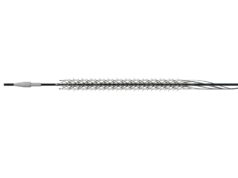
Describing his practice, van den Heuvel states that if a patient requires long-term patency—often those with a high Wound, Ischemia, foot Infection (WIfI) classification for whom early failure is a risk—he opts to deploy a lesion preparation device. Using the Spur peripheral retrievable scaffold system (Reflow Medical) alongside a drug-coated balloon in cases with limited to no calcium, van den Heuvel can prevent flow-limiting dissections and recoil by avoiding the rotational forces the balloon would otherwise exert on the vessel wall.
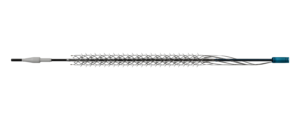
He adds that Spur also allows for better drug uptake, noting, “with a complete and intact ring of calcium it is hard to imagine that drugs from drug-eluting balloons would penetrate the deeper wall layers. Yet, the channels created by the spikes facilitate improved drug uptake and potentially benefit long-term patency”.
Casting an eye ahead, van den Heuvel hopes that technologies such as Spur will improve patient quality of life by reducing reintervention and major amputation rates.
“For the time being,” he continues, “we must accept that our patients will have multiple interventions during their lifetime.” He emphasises that preventing permanent implants while being able to treat long lesions is an “absolute advantage” of Spur, allowing for repeat treatment while “keeping options broadly open”. Van den Heuvel says that “this matters enormously in a population where repeat intervention is the norm, not the exception”.

Scan for more information
on the Spur system and the
CE indication for use.