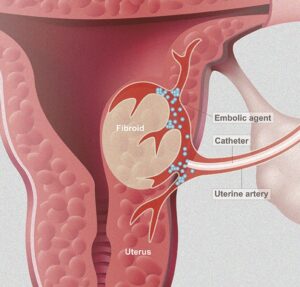
 The development of diagnostic reference levels (DRLs) is pertinent to uterine artery embolization (UAE) as the “first step” to optimise the radiation risks to patients and staff while maintaining the highest level of patient care, results from a UK-wide survey have shown.
Omar Marei (Imperial College Healthcare NHS Trust, London, UK) presented the findings of RADSAFE, a UK survey of radiation doses during uterine fibroid embolization (UFE), at the European Conference of Embolotherapy (ET; 3–5 June, Valencia, Spain).
According to Marei, UAE remains a procedure with substantial radiation exposure which could benefit greatly from the implementation of national DRLs to improve patient and clinician safety. He stated that, due to the radiosensitive nature of the ovaries, there is “inevitable exposure” during UAE. Currently, no national or international guidelines exist on radiation doses during UFE, with some guidance suggesting a target dose area product (DAP) threshold of <50Gycm2 in the literature.
Marei and colleagues retrospectively collected radiation and demographic data from 11 vascular and interventional radiology (IR) centres in the UK for all patients undergoing UAE between 2020 and 2025. Data collected included uterine volume, number and size of fibroids, fluoroscopy time, procedure time, DAP and cumulative air kerma (CAK).
Data from 1,039 UAE procedures were included. Patients had an average age of 46 years, a median uterine volume of 733.6 and patients had an average of five fibroids. Median fluoroscopy time was 18.7 minutes, and median procedure time was 90 minutes. Marei and colleagues noted that uterine volume demonstrated a “weak” but statistically significant positive correlation with DAP. Centre experience demonstrated a strong but statistically insignificant negative correlation with median DAP, Marei stated. He continued that, based on current data, the proposed DRL for DAP is 85.5Gycm2 for standard UAE.
The investigators compared machine type and DAP; they included that 733, 300 and five UFE procedures were carried out using Siemens, Philips and GE HealthCare machines, respectively. Marei reported that, in a post-hoc analysis, the research team found that Siemens technology was associated with significantly longer fluoroscopy times compared to both Philips and GE HealthCare.
During audience questions, Marei stated that this difference may be due to Philips models being “older”. He added that there are many factors involved in this finding, however, including operator experience and training, and the impact these may have on fluoroscopy duration.
Marei emphasised that age, uterine volume, size of largest fibroid, machine manufacturer and centre experience are key areas of consideration when planning a UFE procedure. Finally, the speaker stated that data collection will continue with the aim of strengthening and later publishing their findings to implement a national DRL.