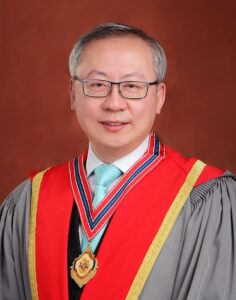
Following this year’s instalment of the Asia-Pacific Society of Cardiovascular and Interventional Radiology (APSCVIR) annual scientific meeting, the society’s president and interventional radiologist Tay Kiang Hiong (Singapore General Hospital, Singapore, Singapore) discusses the core themes that emerged, how the society can support young interventional radiologists and why attending congresses is invaluable for interventionists in training.
What were the key themes and talking points from this year’s APSCVIR meeting?
This year’s APSCVIR meeting (11–14 June, Suzhou, China) focused on medtech innovation and the future of intelligent interventional radiology (IR). Several medtech innovations were featured, in particular those developed in mainland China. These included an ablation probe capable of delivering both cryoablation and thermal energy for tumour ablation, yttrium-90 (Y-90) loaded on carbon microspheres, ‘noiseless’ digital subtraction angiography, robotics and artificial intelligence (AI) applications in IR, among others. This edition of the APSCVIR meeting was also jointly organised with the International Society of Multidisciplinary Interventional Oncology (ISMIO), which meant interventional oncology (IO) was prominently featured with multidisciplinary specialists involved in cancer care and treatments.
How does the APSCVIR support young interventional radiologists?
APSCVIR supports young and early career interventional radiologists in the Asia Pacific region by offering dedicated travel grants to attend our annual meeting, namely the Young IR Grant. The meeting includes specialised sessions for juniors on basic concepts and technical pearls as well as networking opportunities during the annual meeting to connect with peers, world experts and experienced mentors. Our society also has an outreach programme that helps improve IR training in less developed countries in our region. Young interventional radiologists benefit most from the programme where it focuses on hands-on proctorships, localised workshops and virtual webinars.
How important is international collaboration in growing a standardised IR service?
International collaboration is crucial in this respect. Collaborative agreements such as the updated global statement defining IR led by Robert Morgan (St George’s Healthcare NHS Trust, London, UK) and colleagues was supported by dozens of global IR societies to define the foundational principles of IR, and this standardisation works to ensure patients receive equitable care regardless of geographic location and helps to drive a unified IR identity. International partnerships facilitate knowledge and skill transfer to less developed regions and allow centres in developing regions to learn best practices from established centres.
How essential is it for aspiring interventional radiologists to attend conferences?
Attending conferences is highly essential for aspiring interventional radiologists. As IR is a highly procedural and rapidly evolving field, conferences provide indispensable training, research exposure and knowledge updates, especially of new treatments and technologies. Major conferences often go beyond mainstream IR techniques/procedures and cover topics such as practice development, business management, patient care, and multidisciplinary collaboration. It is also a great opportunity to network with peers, world experts, IR leaders, mentors and industry partners which could help with research collaboration, job opportunities and career advancement.