In this editorial, Tomas Baltrūnas (Vilnius, Lithuania) and Lorenzo Patrone (Firenze, Italy) compare the trajectory of robotics in vascular surgery to advances elsewhere, postulating on the reasons for the innovation lag and the likely trajectory the technology will take.
Remote surgical manipulators began to emerge in the 1990s, driven by the vision of bringing robotic precision, stability, and repeatability to the operating field. In minimally invasive surgery, laparoscopic robotics and endovascular robotics started to develop at roughly the same time. The da Vinci surgical system (Intuitive Surgical) received clearance in 2000, while the Niobe magnetic navigation system (Stereotaxis) received clearance only two years later in 2002. Yet, from that point onward, these two domains diverged dramatically.
In 2024, an estimated 2.5–3 million robotic laparoscopic procedures have been performed annually worldwide, whereas the cumulative number of robotic endovascular procedures over approximately 20 years is in the order of around 20,000 cases. This discrepancy illustrates how endovascular robotics, despite comparable technological timing, did not achieve similar clinical penetration or commercial adoption.
The most prominent reasons for this limited uptake include the inability of earlier systems to perform the entire endovascular procedure (focusing instead on only part of the workflow), incompatibility with many commonly used off‑the‑shelf endovascular devices, and complex control interfaces that resemble joysticks or gamepads that were not intuitive for interventionalists.
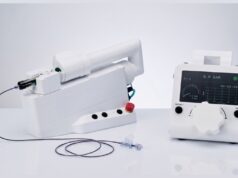
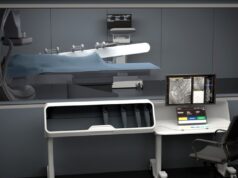
A new generation of endovascular robotic systems is expected to reach the European market in 2026. Endovascular interventions with no X-ray exposure to the operating team and intuitive controls that mimic manual procedure techniques have been demonstrated in the ESSENTIAL clinical trial conducted by Sentante to evaluate their endovascular robotic system. These next-generation platforms are being developed as device-and procedure-agnostic technologies that can support a wide range of interventions using contemporary off-the-shelf devices. This approach should enable multiple procedure types (e.g. peripheral, coronary, neurovascular) to be performed with a single robotic system.
Eliminating occupational X-ray exposure has the potential not only to reduce the long-term risk of radiation-induced malignancy and cataract formation, but also to remove the need for heavy lead aprons, thereby alleviating chronic musculoskeletal strain and back pain. In the future, standing beside an X-ray source in a lead apron may seem as outdated as operating a manual metal foundry or handling nuclear waste by hand.
Endovascular robotics will also act as a catalyst for full digitalisation of the cath lab. Beyond generating a complete digital record of each procedure, robotic platforms create a natural integration point for workflow analytics, standardised reporting, and the seamless incorporation of third-party technologies that are currently cumbersome to use. Examples include continuous integration of impedance-based pressure and flow wires, automated intravascular ultrasound (IVUS) and optical coherence tomography (OCT) pullback and annotation, digital variance angiography, and artificial intelligence (AI)-enabled procedural guidance or ‘copilot’ functions.
Once procedural commands and imaging streams are transmitted between the operator cockpit and the angiography suite over a network connection, the physical distance between the interventionalist and the patient can, in principle, be extended to hundreds or even thousands of kilometres. This opens the door to truly remote endovascular interventions. Time-critical procedures such as treatment of acute ischaemic stroke or life-threatening bleeding could be performed robotically from regional or national centres of excellence, dramatically expanding access for patients in underserved areas. In addition, real-time remote support from high-volume reference centres would enable local hospitals to manage more complex cases with greater confidence, potentially reducing transfers and improving outcomes.
Over the last 30 years, endovascular robotics has largely remained in the ‘typewriter’ era, while laparoscopic robotics has rapidly advanced into the ‘computer’ era. With a completely new approach, endovascular robotics now has the potential to inaugurate a ‘cloud computing’ era, and the coming years will show whether this emerging technology will fundamentally change the trajectory of vascular surgery.
Tomas Baltrūnas is a vascular surgeon at Vilnius University in Vilnius, Lithuania and Lorenzo Patrone is a vascular and interventional radiologist at Azienda USL Toscana Centro in Firenze, Italy.
Disclaimer: Lorenzo Patrone does not have any disclosures related to endovascular robotics and Tomas Baltrūnas is the founder of Inovatyvi Medicina, company developing endovascular robot Sentante.