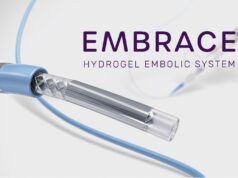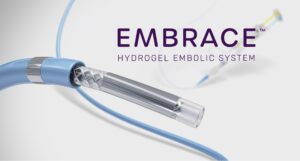
Instylla announced today that the US Food and Drug Administration (FDA) has approved the expanded indication for the Embrace hydrogel embolic system (HES) to include embolization of peripheral arterial bleeds in vessels ≤6mm.
The approval follows the company’s initial premarket approval (PMA) in August 2025 for hypervascular tumour embolization. Embrace HES is commercially available in the USA.
“Patients facing complex vascular conditions need more options. Embrace HES was built to deliver that versatility,” said Sean Boyle, chief executive officer, Instylla. “With approvals now in both interventional oncology and peripheral haemostasis, we’re redefining what’s possible in interventional care and building a transformative platform for the many vascular conditions still ahead.”
The approval was based on the HALT study, a prospective, multicentre, single-arm trial that enrolled 130 patients with peripheral arterial bleeds at 22 US sites. Embrace HES met both prespecified primary endpoints, with 100% freedom from major adverse events and 90.0% clinical success (no rebleeding from the target lesion) through 30 days.
“When treating an arterial bleed, you need an embolic solution that can reach the source of bleeding while providing precise control. Embrace HES allows you to tailor your approach to the anatomy, achieving either distal or proximal embolization with a single embolic agent. Its novel design also allows you to maintain microcatheter access after embolization, unlike many currently available liquid embolics. This combination of control, versatility, and preserved access makes it a valuable new option for interventional radiologists,” said Suvranu Ganguli, chief of Interventional Radiology, Boston Medical Center and professor of Radiology and Surgery, Boston University School of Medicine in Massachusetts, USA, and principal investigator of the HALT study.
“What sets Embrace HES apart is its safety profile and controlled delivery. In the HALT study, I saw firsthand how its design features help minimise non-target embolization and allow you to adjust the embolic placement. I’m looking forward to what this expanded indication could mean for patients,” said Susie Park, Harbor-UCLA Medical Center in West Carson, USA.