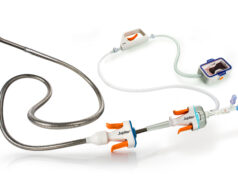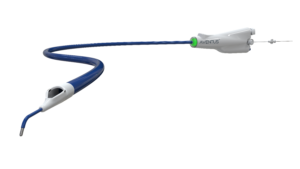
Inquis Medical has announced the launch of SENSE-PE, an all-comer postmarket registry evaluating the safety and efficacy of the Aventus thrombectomy system in patients treated for acute pulmonary embolism (PE).
Cleared by the US Food and Drug Administration (FDA) for the treatment of PE in June 2025, Inquis Medical notes that Aventus is the only thrombectomy platform combining integrated tissue-sensing technology and directional aspiration with autologous blood reinfusion to address unmet clinical needs and enhance procedural efficiency.
SENSE-PE is a prospective, multicentre, single-arm registry that will enrol up to 600 patients at up to 60 US sites.
“SENSE-PE is the first registry of this scale to evaluate real-time tissue identification together with in-line blood return,” said Ripal Gandhi (Miami Cardiac & Vascular Institute, Miami, USA), co-principal investigator of SENSE-PE. “I look forward to generating evidence on the clinical value of these technologies across hundreds of PE procedures, diverse operators, and the anatomical variability we see in everyday practice.”
The study’s primary endpoint is a composite of major adverse events within 48 hours or by discharge, whichever comes first, as judged by independent review. The composite consists of death, major bleeding, device-related clinical worsening, injury to the heart or pulmonary arteries, and the need for additional PE treatment. The registry will also measure functional and quality-of-life outcomes, as well as procedural measures such as device time and total procedure time, catheter passes through the heart, and estimated device-related blood loss.
“Most pulmonary embolism studies enrol a carefully selected group of patients. SENSE-PE takes an all-comer approach, so the results will reflect the patients we actually treat every day,” said Sameh Sayfo (Baylor Scott & White, Plano, USA) and co-principal investigator of SENSE-PE. “A good procedural result is only part of the story. By following quality of life and six-minute walk distance out to 90 days, we’ll learn how patients really feel and function after thrombectomy, which is what matters most to them.”