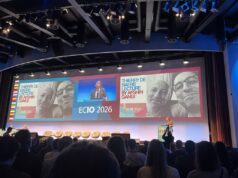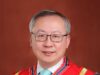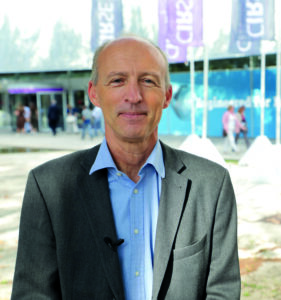
Thierry de Baère, a pioneering figure in interventional oncology (IO) specialising in intra-arterial and locoregional therapies, has died.
Born in paris in1962, De Baère studied at the University of Paris-Sud and completed his residency at the Université de Caen Basse in Normandy, France. Following his studies, he joined the Gustave Roussy Cancer Centre in Villejuif in 1991, where he remained for over three decades as head of interventional imaging and professor of medicine. In this position, De Baère advanced the integration of image-guided therapies within multidisciplinary cancer care.
As one of the foremost architects of IO, De Baère drove progression in minimally invasive therapies for liver, lung, kidney and bone tumours, as a champion of procedures such as percutaneous ablation, transarterial chemoembolization, and portal vein embolization. His work paved the way for more targeted treatments and the expansion of therapeutic options for patients with complex malignancies.
De Baère authored over 450 peer-reviewed publications and served on editorial boards and guideline panels and was instrumental in developing international curricula and standards. This included major contributions to the Cardiovascular and Interventional Radiological Society of Europe (CIRSE) educational initiatives and European IO training frameworks. Among his many honours, De Baère received the 2019 CIRSE Gold Medal— one of the highest distinctions in the field—which recognised his career’s achievements.
Colleagues remember him as an extraordinary physician and investigator, including Lambros Tselikas, team member at Gustave Roussy: “Thierry had possessed a rare talent for bringing people together around new ideas, ambitious projects and innovation. He took genuine pride in the success of his team, with a constant and unwavering commitment to improving patient care.”
De Baère’s leadership extended throughout the global interventional radiology (IR) and IO community through his invaluable contribution to various programme committees for major congresses, including the World Congress of Interventional Oncology (WCIO), and helped steer scientific agendas that shaped the evolution of both disciplines.
He is survived by his family and the extended community of collaborators and friends. Plans to honour him posthumously are set to feature at several congresses in the spring, including the 2026 Society of Interventional Radiology (SIR) annual meeting (11–15 April, Toronto, Canada).