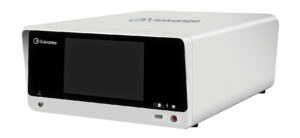
Galvanize Therapeutics has announced the completion of the first commercial procedures using its recently US Food and Drug Administration (FDA)-cleared Aliya EX system.
The milestone marks the first clinical use of the Aliya EX system following its US FDA 510(k) clearance in May 2026 and the first commercial procedures across the Aliya pulsed electric field (PEF) platform’s two primary delivery pathways: percutaneous delivery and endoscopic delivery.
The first percutaneous procedure was performed by Joseph Mammarapallil, associate professor of radiology at Duke University School of Medicine in Durham, USA, and the first endoscopic procedure was performed by Justin Thomas, director of interventional pulmonology at Eisenhower Health (Rancho Mirage, USA).
“Aliya EX allows us to offer PEF to patients who previously may not have been candidates,” said Mammarapallil. “It gives us a larger ablation zone while preserving the predictable, non-thermal energy delivery that have become hallmarks of the Aliya platform.”
“Many of the patients I see have exhausted multiple treatment options,” said Thomas. “Aliya EX expands the patients I can consider for PEF ablation while maintaining the favourable safety profile and unique immunostimulatory potential that first drew me to this technology.”
Aliya EX expands the capability of the Aliya PEF platform by delivering up to two times larger ablation diameter, resulting in as much as seven times increase in ablation volume, while maintaining the defining attributes of Aliya PEF. The system delivers electrical pulses that induce non-thermal regulated cell death, preserving surrounding tissue architecture and remaining compatible with existing oncologic diagnostic workflows and standard therapies.
“These first commercial procedures are demonstrating the performance that Aliya EX was designed to deliver,” said Doug Godshall, chief executive officer of Galvanize Therapeutics. “Physicians can now consider more patients for Aliya PEF while preserving the familiar workflow of biopsy and ablation in a single procedure. Our hope is that the larger ablation zone will further enhance the clinical response.”