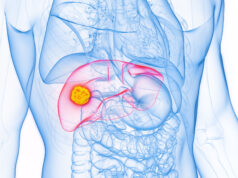
 A UK multicentre audit of selective internal radiation therapy (SIRT) practice in hepatocellular carcinoma (HCC) patients has demonstrated that treatment has “markedly” increased following the 2021 National Institutes of Health and Care Excellence (NICE) approval of the technique across the National Health Service (NHS) in a multidisciplinary setting.
Presented by David Barnes, researcher for the National Institute for Health and Care Research (NIHR) Biomedical Research Centre (Newcastle upon Tyne, UK) at the British Society of Interventional Radiology (BSIR) annual meeting (4–6 November, Birmingham, UK), the audit combined four UK centres, identifying 329 patients who received SIRT—84 pre- and 245 post-NICE approval. Comparison of patient clinical data pre- and post-NICE showed patients treated post-NICE were more likely to have single lesions, unilobar disease and no portal vein thrombosis (PVT).
Overall survival post-NICE has improved significantly from 15.9 months to 28.6 months.
“This improvement likely reflects improved patient selection, uptake of personalised dosimetry dose calculations, and better systemic treatment options available upon progression,” said Barnes.
Barnes detailed that their analysis follows a 2022 Newcastle University Translational and Clinical Research Institute audit, against which their current audit was compared, to assess uptake of recommendations. The 2022 audit recommended SIRT as a targeted treatment strategy in patients who are unsuitable for transarterial chemoembolization (TACE). The audit outlined that patients with a single lesion, unilobar disease, preserved liver function and no PVT may benefit from SIRT.
Following NICE approval and the Newcastle audit, Barnes noted several key differences in their data. He highlighted fewer PVT patients and more Barcelona Clinic Liver Cancer (BCLC) stage 0/A, or early-stage patients being treated with SIRT, and added that the technique was more likely to be deployed as first-line treatment. Regarding the latter finding, Barnes noted that this supports SIRT’s “increasing role as a viable first-line option, rather than a treatment considered when others have not been successful”.
“The number of patients treated with SIRT has markedly increased post-NICE approval, with a highly encouraging overall survival improvement. Further analysis is required to better understand the impact of individual factors, such as personalised dosimetry, on overall survival,” Barnes reported.