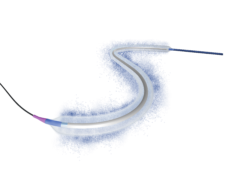
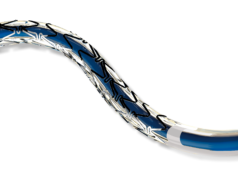
“Our conclusion is: Amber is safe, efficacious and might change the way we technically embolize some of our indications today,” were the closing remarks of Fernando Gómez Muñoz (Hospital Universitari I Politècnic La Fe, Valencia, Spain), presenting data from a first-in-human, pivotal study of the Amber SEL-P (iVascular) embolic agent for complete peripheral vascular occlusion at the Cardiovascular and Interventional Radiological Society of Europe (CIRSE) annual congress (13–17 September, Barcelona, Spain).
The multicentre, prospective, single-arm study was conducted across 11 Spanish centres. Patients aged 18–95 years were eligible if they had previously undergone varicose vein embolization (varicocele, pelvic venous congestion, varicose veins in portal hypertension), type II endoleak, portal embolization, active arterial haemorrhage/aneurysm/pseudoaneurysm, pathological organ, hypervascular tumours, or vascular anomalies.
Gómez Muñoz noted that patients with known hypersensitivity or allergy to Amber-20, dimethyl sulfoxide (DMSO) solvent, or contrast agent were excluded, as were those with impaired hepatic or renal function.
“The liquid itself has some specific characteristics that differentiate it from other DMSO-compatible embolics,” he said, emphasising that the embolic is “ready to use with no prior preparation required”. He explained that Amber does not have the radiopacity of tantalum, “but it has enough radiopacity and allows very good visualisation during treatment”.
“Once you have started embolizing and you are not satisfied with how far your injection has reached—since it coagulates and is not like glue or other liquid embolics—you can go through the cast and embolize more distally. Very importantly, it does not trap the catheter, and you can retrieve it without fear of entrapment or fragmentation,” Gómez Muñoz added.
The primary objective of the study was to measure the rate of serious adverse events (SAEs) within the periprocedural period, defined as 24 hours, related to the Amber SEL-P embolic agent. Secondary endpoints included the rate of complete vascular occlusion, determined by angiographic assessment following treatment.
A total of 70 patients will be enrolled: 15 patients were assigned to the stage I safety cohort and 55 to the stage II safety and efficacy cohort. Currently, 13 patients need to be recruited to close the study, stated Gómez Muñoz.
Presenting data from stage I only, Gómez Muñoz reported treatment indications including one type II endoleak, one portal vein embolization, four active bleeding cases, three pathological organs, and six hypervascular tumours.
Complete vascular occlusion was achieved in all patients. One serious adverse event, identified as post-embolization syndrome, was recorded; however, Gómez Muñoz underlined that none of the adverse events were attributable to the device.
Subsequently, asked how distal the Amber SEL-P agent can travel from a proximal injection to achieve distal penetration, Gómez Muñoz responded that “it goes much more distal” than can be seen angiographically, adding that this will be the subject of an upcoming publication.