Which stories were most read by the interventional community in 2025? Here, Interventional News looks back at the most popular stories over the past year.
1. “Historical” CREST-2 data show reduced stroke risk with carotid stenting versus medical therapy alone

The international CREST-2 study has found that, for people with severe carotid artery narrowing who have not experienced recent stroke symptoms, a minimally invasive carotid artery stenting (CAS) procedure—combined with intensive medical therapy—significantly lowered stroke risk compared with medical therapy alone. The more traditional surgical approach of carotid endarterectomy (CEA) did not show the same benefit, however.
2. IO in IO: Will you be an immunomodulator?
Minimally invasive and image-guided immunomodulation may transform local into systemic treatment through the multidisciplinary combination of drug plus device plus imaging guidance says Bradford J Wood (Bethesda, USA), speaking on immunotherapy in interventional oncology or ‘IO in IO’.
3. New Horizons: Interventional News’ latest section dedicated to training and early practice
Editor-in-chief Brian Stainken welcomes readers to a new section of Interventional News focused on the life, ambitions and opinions of young interventional radiologists in training and early practice.
4. Accumulating long-term IVL data spark debate on key outcome measures for CLTI
Data on peripheral intravascular lithotripsy (IVL) for the treatment of calcified lesions below the knee (BTK) in patients with peripheral arterial disease (PAD) have rapidly emerged in recent weeks. At the 2025 Vascular Interventional Advances (VIVA) conference (2–5 November, Las Vegas, USA), several studies including DISRUPT BTK II, FORWARD PAD, and POWER PAD II delivered positive reports, some contributing to the longest follow-up of patients treated with IVL to date. As industry races to produce data for the newest devices, clinicians speak to Interventional News on the outcomes that matter most as continued assessments determine how IVL fits in the armamentarium of calcium-modifying technology.

5. Philips expands commercial availability of LumiGuide imaging system
Philips has announced the expanded commercial availability of LumiGuide 3D device guidance—the much-heralded first real-time artificial intelligence (AI)-enabled light-based navigation solution for image-guided therapy—across Europe and the USA.
6. Terumo Aortic announces launch of Fenestrated Treo pivotal IDE study in USA
Terumo Aortic has announced enrolment of the first patient in the Fenestrated Treo pivotal investigational device exemption (IDE) study in the USA. This study is designed to evaluate the endovascular repair of juxtarenal and suprarenal aortic aneurysms using the Fenestrated Treo abdominal stent-graft system. Getinge’s investigational iCast covered stent system will be used as a bridging stent in the study.
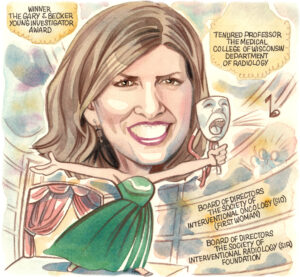 7. Profile: Sarah B White
Sarah B White (Milwaukee, USA) dons many titles, namely she is a tenured professor of vascular and interventional radiology, a professor of surgery and surgical oncology, as well as associate dean at the Medical College of Wisconsin (MCW). In this article, White speaks to Interventional News about her love for interventional radiology (IR) and how she built her career in the field.
 8. Profile: Alex Barnacle
Alex Barnacle—consultant paediatric interventional radiologist at Great Ormond Street Hospital for Children—shares the lasting impact made by her mentors, an early case that changed treatment management for the condition, and the collaborative work that must be done to resolve inequalities in paediatric interventional radiology (IR).
9. Controversies in transhepatic versus transperitoneal access for percutaneous cholecystostomy
Percutaneous cholecystostomy is a valuable intervention for managing acute cholecystitis in high-risk surgical patients. Yet, the choice between transhepatic and transperitoneal access routes remains a topic of ongoing debate. Here, Nikolaos- Achilleas Arkoudis and Stavros Spiliopoulos (both Athens, Greece) analyse contemporary viewpoints to provide consensus on the best treatment pathway.

10. Is cryoablation the pinnacle of IO’s de-escalation philosophy?
De-escalation is a principle applied in many fields throughout medicine to reduce the duration, dose and number of therapies a patient receives to preserve quality of life. In Frano Orsi’s (Milan, Italy) view, cryoablation encapsulates this philosophy, providing patients seeking treatment for breast cancer with a minimally invasive alternative to surgery. Here, he discusses why he believes this to be true and what needs to happen to secure cryoablation as ‘standard’ for breast cancer intervention.