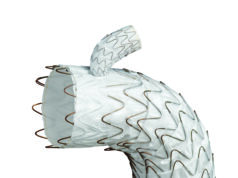
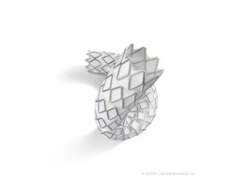
Gore has announced US Food and Drug Administration (FDA) approval of a new 6–10mm diameter range for the Viatorr transjugular intrahepatic portosystemic shunt (TIPS) endoprosthesis with controlled expansion.
Building on more than 25 years of innovation in portal hypertension, the expanded diameter range offers physicians greater flexibility to customise treatment based on individual patient needs, with the confidence that comes from Gore’s controlled expansion technology.
In a recent press release the company describes that the Viatorr device enables consistent, tailored control of the shunt diameter to achieve a targeted portal pressure gradient. Once sizing is set, the device maintains a constant diameter.
Previously approved with an 8–10mm diameter range, the latest device iteration gives clinicians more options when balancing a desired portal pressure gradient and the risks associated with over shunting.
“When I think about my day-to-day practice, I do see a need for a smaller TIPS stent to benefit my patients. A 6–10 mm diameter range increases my ability to target a portal pressure gradient and meet the specific needs of my patients,” said Wael E Saad, director of interventional radiology and vice chair of image guided procedures at the University of Utah and a Gore consultant. “I trust in controlled expansion today and will trust it in smaller diameters.”
The Viatorr device remains the only covered TIPS device with more than two decades of clinical performance and over 500 publications supporting a track record of patency and reliability. Constructed using Gore’s proprietary ePTFE graft lining, the device is designed to resist bile and mucin permeation—common causes of patency loss in TIPS.
“The controlled expansion technology built on the Viatorr [device’s] legacy of predictable performance in both de novo and revision TIPS procedures,” said Jason Belzer, Americas business leader, Medical Product Division. “Now, with a broader diameter range in a single device, we’re not only improving control during implantation—we’re delivering more options to physicians without increasing inventory.”
“From the literature, we are seeing larger TIPS shunts are no longer necessary to establish excellent outcomes,” said Brett E Fortune, medical director of liver transplant programme and associate professor of medicine at Montefiore Einstein and a Gore consultant. He continued, “I think it’s an exciting time that we’ll be able to use smaller shunts in select patients to minimise possible adverse risks such as hepatic encephalopathy, cardiac decompensation or hepatic decompensation, yet still have superior outcomes in controlling their bleeding and ascites.”