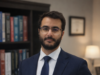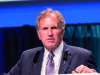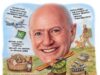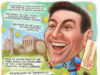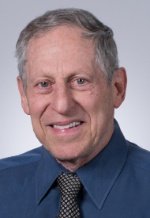
From the baseball field to the interventional magnetic resonance imaging (MRI) suite, Eric vanSonnenberg’s career is woven with curiosity and innovation. A surgeon by early training and an interventional radiologist by intuition, vanSonnenberg has helped shape the foundations of image-guided therapy. His work at pioneering institutions has advanced procedures like percutaneous cholecystostomy and abscess drainage, while his collaborative ethos underscores the tenets that define interventional radiology (IR) today. VanSonnenberg credits necessity and the lessons learned from ‘real patients’ as the driving force behind his innovations. Yet, beyond his many clinical milestones, his continued commitment to mentorship highlights his dedication to the development of IR for the future. Here, vanSonnenberg reflects on the experiences that have shaped his multifaceted career, spanning early experiments to “miracle” cases, and shares his vision for the specialty’s future.
Why did you choose to pursue a career in medicine and what drew you to interventional radiology?
I recently gave a talk and wrote an article about when I was 12 years old—about the six careers I wanted to pursue. They were, in descending order: 1) professional baseball player, 2) professional basketball player, 3) Supreme Court judge, 4) pastor/minister, 5) bulldozer operator, 6) medical doctor.
Throughout most of medical school I planned to pursue surgery. I did both my sub internship and my internship in surgery. Although I’ve always loved diagnostic radiology (DR)—and still do it—focusing on interventional radiology as my primary career came naturally.
Who are the individuals that have helped to shape your career?
My wife and I just came back from our seventh annual reunion in Boston with my previous Massachusetts General Hospital (MGH) mentors who are now my best friends—Joseph Ferrucci, Jack Wittenberg, Joe Simeone and Peter Mueller. I would also include later colleagues from University of California San Diego (UCSD), including Giovanna Casola, Gerhard Wittich and Horacio D’Agostino.
Could you outline one or two of your most memorable cases?
Moonlighting—which my classmate Courtney Neff and I did lots of during our radiology residencies—in a private hospital in the Boston area, a surgeon had said that he heard that at MGH (40+ years ago) we were draining fluid collections through the skin. He asked if I could drain a hot gallbladder (cholecystitis) in a patient who had just had a myocardial infarction. Of course, I said yes, and we believe that this was the first percutaneous cholecystostomy in Boston. Other than the patient developing vagal bradycardia and hypotension—which we published—all eventually went well.
A second memorable case was being asked by a Spanish-speaking surgeon to go to Spain to work on the “richest man in Spain”. This occurred soon after I had arrived at UCSD after my MGH abdominal imaging and interventional fellowship. The patient had a bilirubin of 18mg/dL, was septic, sky-high leukocytosis status following several pancreatic and abdominal operations, and was immobile because of incapacitating abdominal pain.
My internal medicine residency background, which took place before radiology and in which I eventually became board certified, was helpful in determining initially that he was on numerous cholestatic jaundice medications, which we then stopped. After doing numerous IR procedures—draining an infected splenic haematoma, biopsy of a previously unknown metastatic lesion, celiac ganglion block to ameliorate the pain—the patient’s bilirubin was down to 3mg/dL, he became afebrile and was up walking around. The surgeon who had contacted me to go to Spain and I were lauded extensively in Spain with the word “milagro” meaning miracle.
You have invented many devices throughout your career. How did you decide which ideas would be successful?
“Necessity is the mother of invention”, or as some would say, “actual patients are the best substrate to create inventions”. I was a fellow in abdominal imaging and intervention at MGH when, I believe, my surgical background was instrumental in designing numerous different catheters (including the sump catheter) for various types of drainages—abscess, gallbladder, pancreatic, thoracic, gastrostomy, gastrojejunostomy and receptacles to avoid needle sticks.
 You have worked in hospitals in several states in the USA. Which hospital and state were your favourite and why?
True, I have moved around, always with good reason and always with positives from each stop. MGH—my basic training and being exposed to luminaries of radiology who have become my best friends; UCSD—heavy duty daily abundant IR cases, with creativity abounding; University of Texas—being exposed and immersed in interdepartmental administration, while still maintaining IR activities; Brigham and Women’s Hospital—a new and highly valued radiology colleague, Stuart Silverman, where we took percutaneous tumour ablation to new heights; Dana Farber Harvard Cancer Institute—was a wonderful experience working with highly dedicated folks in the oncology world (published a commentary article on the oncology experience, ‘Depressing?—Heck No, Uplifting!’); University of Arizona— somewhat transitioning to primarily working with medical students while enhancing DR and IR among other specialities. Recently, I did an hour session in which around 40 1st and 2nd year medical students showed up voluntarily to hone their interest in radiology.
Given that you were a member of the MGH abdominal group that were pioneers in body IR, how have you promoted and expanded IR over the years?
Initially, there was plenty of resistance against what we were doing. Our initial manuscript on percutaneous abscess drainage was accepted in JAMA, which, at the time, was the largest subscription medical journal. This was strategically thought to be a wise idea to promote the technique by our section leader Joseph Ferrucci. The editor of JAMA at the time asked if we would be amenable to include a surgical response, and of course we said yes. The editor showed us potential surgical responses that included: “This is a terrible idea, it’ll never work.”
When I was in my residency and fellowship at MGH, I recall two international faculty physicians from Iran and Canada who came to learn from us as we were pioneering these nascent IR procedures. When I moved to UCSD, we expanded this visiting fellow concept with a programme that attracted many US radiologists, and a wide swath of radiologists from around the world (South Africa, Denmark, Japan, Mexico, New Zealand, Canada, Germany, England, Korea, Australia, Ireland, Argentina). My IR colleagues, Giovanna Casola, Gerhard Wittich and Horacio D’Agostino were instrumental in the teaching, national and international lecturing, visiting professorships, and publishing that we did to ‘spread the word’.
Given the phrase, ‘you can never start too early’, my colleagues and I routinely spoke to residents, fellows, and medical students about radiology imaging leading to IR. In the UCLA system, we started a pipeline series of conferences focused on high school students (up to 700 attendees) that would lead to undergraduate studies at UCLA, then medical school at UCLA. Currently, at the University of Arizona, we have had five years of the National and International Radiology Symposium for Medical Students. These zoom webinars cover the spectrum of radiology, with specific talks on IR. The participation of medical students has not only included the USA and Canada, but a wide variety of international medical students from Asia, Europe, South America, Australia, and Africa. IR is clearly entrenched medically around the world and continually expanding.
Currently, along with a paediatric IR luminary friend, Richard Towbin, he and I mentor medical students, predominantly at the University of Arizona. The students have had several hundreds of publications and national and international posters and oral abstracts that have been presented with our mentoring. At any given time, we have well over 50 projects in progress with the students. Truly, we can never start too early.
Throughout your career you formed or joined teams. What has been your experience of working within a team and how important is teamwork in IR?
Teamwork in all endeavours is essential. The focus on teamwork likely emanates from my experience managing many baseball teams as a player and being the captain of my high school basketball team. While medicine in general and IR is intellectually and clinically captivating, whom we work with makes it far more rewarding and enjoyable. When I write letters of recommendation, I always include words about teamwork with respect to the individual. I consider that sine qua non in colleagues and trainees whom I’m happy to support.
What advice would you give to those currently training in IR?
Choose the right practice for you personally (academic/private practice), keep work/ life balance, balanced, don’t lose your DR skills and family is a priority. Six of us interventionalists—Mueller, Towbin, Silverman, Berliner, D’Agostino, and myself— recently published an article on transitioning from IR; probably worth a read for budding interventionalists, this was titled ‘Transitioning from interventional radiology: ideas for the inevitable’ published in Abdominal Radiology.
How has your background in competitive sports influenced your interventional career?
Several themes I would say. First is the importance of teamwork. Within our radiology department this including technologists, nurses, administrative staff, transporters, janitors, residents, fellows, medical students— basically everyone. Outside of our department would include our physician consultants, and anyone related to care of the patients.
A second theme relates to tenacity. As long as it doesn’t harm the patient, keep on going with challenging situations is similar to the ‘never give up’ mentality in sports. Nonetheless, judgment is important and there are times when it is prudent to pack it in for another day. Win or lose, being respectful, with integrity, works in sports and in IR. The pinnacle of this teamwork, tenacity, respect, and focus on the patient in my personal experience was at the Dana Farber Harvard Cancer Institute. Although, I’ve never worked in the Mayo Clinic, I love their mantra: “The only interest to be considered, is the best interest of the patient”.
What does your life look like outside of medicine?
I’ve always been a sports guy, so I’ve continued to play competitive hardball baseball and basketball, in addition to skiing, tennis, swimming, and deep-sea fishing. I’m far from a virtuoso, but I continue taking and playing banjo and mandolin, have been a serious Master of Divinity student at the Phoenix Seminary (non-denominational Christian theology) but place family, kids, and friends above all else. I like taking my internal medicine wife, Misa, to the baseball batting cage where she’s really good!
As a known fan of Yogi Berra, what is your favourite quote?
“Pitching is 90% of baseball, hitting is the other 1/2.” That always gets a laugh when I put it in the results and data section of talks!