This advertorial is sponsored by Sirtex Medical.
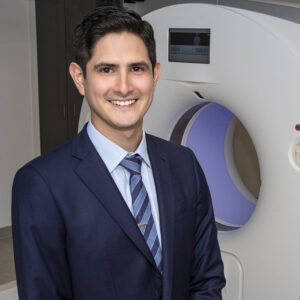
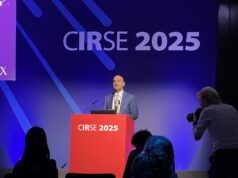
Interim data from the DOORwaY90 study, a prospective, multicentre, open-label, single-arm trial evaluating SIR-Spheres yttrium-90 (Y-90) resin microspheres (Sirtex) as a first-line option for unresectable hepatocellular carcinoma (HCC), demonstrated strong local tumour control and a well-tolerated safety profile. According to investigator Alexander Villalobos (University of North Carolina at Chapel Hill, Chapel Hill, USA), the findings reinforce the value of personalised dosimetry and provide important evidence for the use of Y-90 resin microspheres in patients with HCC unsuitable for resection or ablation.
Reflecting on the study design, Villalobos describes DOORwaY90 as breaking new ground for the assessment of the safety and efficacy of resin Y-90 microspheres as a first-line treatment for local tumour control in unresectable HCC. He states that: “DOORwaY90 is the first prospective study to evaluate Y-90 resin microspheres using personalised dosimetry, incorporating image-based treatment dose verification and an independent centralised review to assess local tumour response.”
The trial enrolled 100 patients across 18 centres, treating 121 tumours in total. Treated lesions were relatively small, Villalobos notes, highlighting that while the maximum single tumour diameter permitted in the patient cohort was ≤8cm, the median treated tumour size was 2.8cm. Patients were required to meet baseline Barcelona Clinic Liver Cancer (BCLC) stage A–C criteria, Child-Pugh score of A, Eastern Cooperative Oncology Group (ECOG) performance score of ≤1, and have a HCC considered ineligible for surgical resection or percutaneous ablation.
Future liver remnant (FLR) thresholds were also an important consideration for eligibility for treatment. Villalobos notes that patients needed to have more than 33% FLR to be included in the study. If the FLR was between 33–40%, the dose to the perfused normal liver dose could not exceed 150Gy. If the FLR was above 40%, meaning no more than 60% of the liver was being treated in a single session, then dosing was not restricted by normal liver tolerance, Villalobos says.
High tumour dose with minimal toxicity
At the time of interim analysis, 65 patients had completed one-year follow-up, with all 100 patients included in the safety cohort. Villalobos reiterates that the tumours included in the study were on the smaller end of the spectrum, so “the median delivered tumour absorbed dose was 513Gy, which is considerably higher than the protocol’s target planned mean tumour dose range of 150 to 400Gy.” All treated patients received three-day pre-calibration resin Y-90 microspheres.
Efficacy endpoints exceeded expectations, Villalobos states, sharing that objective response at nine months was 98.5%, with 64 of 65 patients responding to treatment. “The study’s goal for that endpoint was over 40%, so this was an excellent outcome. At six months, the tumour duration of response was 77%, again surpassing the predefined target of 60%.” Across all treated tumours, investigators observed no local progression. In other words, “100% local tumour control rate”, Villalobos says.
Safety outcomes were similarly favourable, as “only three out of 100 patients experienced significant procedure-related adverse events, which is a very low rate when it comes to cancer therapies,” Villalobos details. “Compared to similar Y-90 radioembolization HCC studies with Y-90 glass microspheres—like the retrospective multicentre Legacy study where grade 3 events were reported in 19% of patients—the low incidence of adverse events in DOORwaY90 was very favourable,” Villalobos says.
Dosimetry thresholds
The unexpectedly high delivered median tumour absorbed doses raised questions regarding appropriate tumour dose targets; however, Villalobos describes a general trend towards increasing tumour-dose thresholds for resin Y-90 radioembolization over recent years. He explains that recommended thresholds have steadily risen and that “earlier data were based on lower specific-activity microspheres, which can in theory achieve similar biological effects at lower doses with a higher number of particle densities”. With more contemporary particles and emerging pathological necrosis data, he adds that the dose thresholds for higher specific activity resin Y-90 microspheres have increased, and this is reflected in DOORwaY90.
While DOORwaY90 data showed that received median tumour absorbed dose of >500Gy was well tolerated, Villalobos cautioned against aiming for 500Gy mean tumour dose in all instances, stating that “careful consideration” is needed whenever personalised dosimetry is conducted on a case-by-case basis.
“I wouldn’t say that we should universally target 500Gy always, but DOORwaY90 has shown that high tumour doses can be achieved with resin Y-90 microspheres and that this can be well tolerated by patients. In general, users should know that we should aim for slightly higher tumour dose thresholds whenever we are working with higher specific activity particles,” he adds. For curative intent ablative radiation segmentectomy using three-day pre-calibration resin, DOORwaY90 data suggests that aiming for at least 400Gy to the perfused angiosome is “reasonable and well tolerated”, Villalobos states.
Role of pre-calibration
For those new to resin-based Y-90 microspheres radioembolization, Villalobos describes what is meant by pre-calibration: “Within a same market region, all resin-based Y-90 microspheres vials have approximately the same number of microspheres within them. The only thing that changes is that some vials have had more time to decay than others; vials used closer to the day of calibration, so one- or two-day pre-calibration vials have had more time to decay than four-day pre-calibration vials, for example.”
To date, while most resin-based Y-90 microsphere data supports the use of up to three-day pre-calibration, higher specific activities such as four-day pre-calibrations are possible. Villalobos recommends to “stay tuned, for data on these higher specific activity resin Y-90 microspheres which will be coming out soon”.
Influence on practice
The DOORwaY90 investigators reported that the strength of these interim results supported US Food and Drug Administration (FDA) approval of SIR-Spheres with partition dosimetry as a first-line therapy for unresectable HCC, thereby expanding the treatment indication in the USA.
Villalobos states that findings have already had an impact on clinical decision-making at his centre. “For years we took an approach similar to ALARA [as low as reasonably achievable], giving enough dose to achieve tumour control but avoiding higher exposures due to concerns about toxicity,” Villalobos notes. “This study shows that a median dose above 500Gy is well tolerated for small HCCs, which increases our confidence in treating aggressively when appropriate.”
Before FDA approval, resin microspheres were used off label for HCC at Villalobos’ institution, however, insights gained from DOORwaY90 have acted as a long-awaited confirmation of the efficacy of resin microspheres. “This study is a significant step forward for resin microspheres. It essentially validates what many centres have observed for years. The results demonstrate that both segmentectomy and less selective treatment work effectively with resin and are very well tolerated.”
Long-term DOORwaY90 outcomes Villalobos describes the benefit of gaining longer-term durability data for patients in the DOORwaY90 cohort. He explains that, radiation-induced liver disease or pneumonitis would typically present within three to six months, “so, the noted safety provided by DOORwaY90 with the one-year safety data is very reassuring”, he states. “However, two- to five-year follow-up would be valuable for understanding the duration of response as well as the long-term safety profile of resin Y-90 radioembolization.”
In a smaller prospective clinical trial published in the journal Clinical Nuclear Medicine in 2024 by Nima Kokabi, Villalobos and others, radioembolization of unresectable HCCs with two-and three-day pre-calibration resin microspheres and personalised dosimetry demonstrated strong long-term tumour control.
“In this study, our group saw a 92% complete response rate at three years and 100% objective response for patients that underwent resin Y-90 segmentectomy. It would be very encouraging to see similar long-term data from DOORwaY90, if possible” he adds.
Final results from the study are expected soon. Villalobos hopes that the full data will be available by the end of the first quarter of 2026, “although other factors, including journal review, may delay the timeline,” he states. While awaiting its publication, he asserts that the DOORwaY90 results are a “meaningful step” in showing that resin-based Y-90 radioembolization “works well” in unresectable HCC.