Interim analysis from the prospective multinational European Registry for Renal Cryoablation (EuRECA)—aimed to assess the oncological outcomes and safety profile of percutaneous cryoablation for T1a renal cell carcinoma (RCC)—has demonstrated that the treatment effectively controls cancer and has a favourable safety profile, particularly for elderly or medically compromised patients who cannot undergo surgery.
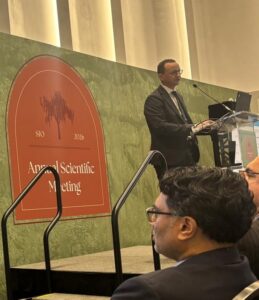
The initial results were presented by Ole Graumann (Aarhus University Hospital, Aarhus, Denmark) at the Society of Interventional Oncology (SIO) annual meeting (4–8 February, Savannah, USA).
Describing the purpose of the registry, Graumann explained that the incidence of RCC, particularly tumours ≤4cm (stage T1a), has risen significantly due to widespread use of cross-sectional imaging. He explained that, while partial nephrectomy remains the “gold standard” for localised T1a tumours, thermal ablation such as cryoablation is emerging as an alternative, especially among patients unfit for surgery.
The presenter detailed that approximatley 1,700 patients with renal tumours were enrolled in the registry between 2014 and 2020 from 14 centres across seven European countries.
During the interim period of the long-term follow-up, 922 patients with biopsy-confirmed T1a RCC were evaluated. The primary outcomes assessed were technical failure, local progression, and overall survival. Secondary outcomes included 30-day hospital readmission and complication rates. Patients had an average age of 69.7 years with a median tumour size of 2.7cm, and an average RENAL nephrometry score of 7.
At SIO 2026, Graumann reported that local recurrence-free survival at five-year follow-up was 97.2% and cancer-specific survival was 99.5%. He continued, reporting a 97.7% primary and 99.3% secondary efficacy rate. Complications occurred in 11.2% of procedures, predominantly minor (9.7%), and the 30-day readmission rate was 4.7%.
“These numbers are only meaningful if you compare them to previous prospective studies,” Graumann stated, comparing their results to those of Mottaghi et al, Chan et al, Andrews et al, Morkos et al, Breen et al, and Lim et al. In doing so, Graumann drew the SIO audience’s attention to similarities between the datasets in regard to complications, stating, “our numbers are good”.
“Our conclusion is that cryoablation for T1a RCC is safe”, said Graumann. “It’s a practical treatment choice for elderly patients who are not candidates for surgery and for thosepatients with hereditary RCC and solitary kidney RCC.”