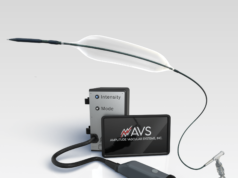
 Data on peripheral intravascular lithotripsy (IVL) for the treatment of calcified lesions below the knee (BTK) in patients with peripheral arterial disease (PAD) have rapidly emerged in recent weeks. At the 2025 Vascular Interventional Advances (VIVA) conference (2–5 November, Las Vegas, USA), several studies including DISRUPT BTK II, FORWARD PAD, and POWER PAD II delivered positive reports, some contributing to the longest follow-up of patients treated with IVL to date. As industry races to produce data for the newest devices, clinicians speak to Interventional News on the outcomes that matter most as continued assessments determine how IVL fits in the armamentarium of calcium-modifying technology.
Several late-breaking data presentations at VIVA 2025, Ehrin Armstrong (Swedish Medical Center, Denver, USA) shared 12-month results from the postmarket, prospective, multicentre DISRUPT BTK II trial, evaluating the Shockwave IVL system (J&J MedTech/Shockwave Medical) in 250 patients with 305 lesions across 38 sites globally.
In the study, 58.5% of patients presented with baseline wounds, 80% with chronic limb-threatening ischaemia (CLTI), 70% with diabetes mellitus, 30% with chronic total occlusions (CTOs) and 85% with moderate-to-severe calcium. The research team demonstrated a 94.8% freedom from major target limb amputation, with no amputations observed among non-CLTI patients. Freedom from clinically driven target lesion revascularisation (CD-TLR) was achieved in 84.5% of patients and Rutherford classification improvement was reported in 75.5% of patients at one-year follow-up.
Among those with CLTI at baseline, 8.1% of patients experienced an amputation. Significant symptomatic and VascuQoL improvements were also documented, with a more than five-point increase from baseline (11.9±4 to 17.2±5, p<0.001) at one year.
Armstrong noted that the “DISRUPT BTK II study represents a complex, truly real-world patient and lesion cohort,” highlighting high rates of diabetes mellitus, severe target lesion calcification, dialysis-dependent renal failure and CLTI with wounds. He added that the trial has set a “new standard” by introducing IVL as a “frontline strategy” to modify calcification and restore vessel compliance.
A paradigm shift in cutting calcium
“Up to one year, these results suddenly start to become more relevant,” says Conrad von Stempel (Royal Free Hospital, London, UK), speaking to Interventional News, detailing how the emerging evidence aligns with his experience. “IVL has initiated a total paradigm shift in the way we release calcium.”
Von Stempel explains that his centre’s adoption of IVL came from necessity. “We have a big renal population and in that group of patients there wasn’t really a safe device to use,” he states. Atherectomy devices, he recalls, “promised to cut the calcium, but there’s always a risk of trashing and other complications”, whereas IVL has provided “a better way” to improve treatment compliance. “It wasn’t necessarily always about removing the calcium but preparing the vessel to respond better to our definitive treatment—be it plain balloon angioplasty, a drug-eluting device or stenting.”
In a CLTI population, von Stempel adds that IVL allows clinicians to “be a little gentler” in vessel preparation, offering a strong safety profile even if the treatment is unlikely to work in the most severe cases. He now uses IVL five to 10 times a week “for everything from iliac disease down to the pedal vessels”, guided by intravascular imaging (IVUS).
For Raghu Lakshminarayan (Hull University Teaching Hospital, Hull, UK), who has been using IVL for approximately five years, the technique’s impact on calcific disease is reflected by the sharp rise in UK utilisation. “Around 5,000 catheters were sold in the UK last year, which is substantial. There’s proven safety and efficacy data and now we’re working to see if it improves amputation-free survival, that’s the bottom line,” he says.
In Europe, however, reimbursement challenges limit access, states Peter Reimer (University Hospital Freiburg, Freiburg, Germany), who adopted IVL after witnessing its successes within clinical trials. “In Germany, you have to justify when and why you want to use a device, discuss it with your hospital administration, present the costs and argue that, by using IVL upfront, you might avoid other expensive interventions such as multiple stents,” he describes. Reimer defines how IVL can also be used off label to soften calcium that has grown outside of a stent and is compressing it before re-dilating rather than placing more stents, creating a costly “full metal jacket”, he says.
Priority outcome measures
As solid justification builds through emerging data, speakers agree that outcome measures must reflect what is most meaningful to clinicians and patients. Lakshminarayan highlights reintervention rates and amputation-free survival as key endpoints for trials in this arena. Above all, he hopes that a reduction in reintervention rates will “improve patient quality of life and reduce costs”, particularly given how high reintervention rates typically are for calcific disease.
Reimer similarly highlights mobility, explaining that “if they can walk, mortality decreases significantly. But if they undergo major amputation, it’s fatal”. In his view, maintaining ambulation in this patient population is the “most important outcome measure”.
Von Stempel, however, argues that powering a CLTI IVL study to evaluate amputation-free survival is “too narrow” a clinical outcome in this complex group of patients. “If you look at wound healing, if you look at tissue loss—all of these things—I don’t think they are particularly robust outcome measures. We need to develop a win ratio which is a composite measure of outcomes. CLTI is such a minefield to study,” he says.
First-ever IVL CLTI registry
To address this, a first-of-its-kind study has been launched to evaluate the role of IVL in CLTI: the Chronic Limb-Threatening Ischaemia treated with Intravascular Lithotripsy Observational (CALCIO) prospective cohort study—funded by Shockwave Medical in collaboration with the Cardiovascular and Interventional Radiological Society of Europe (CIRSE). The study’s aim is to collect real-world data to better understand clinical effectiveness while avoiding the narrow scope of randomised controlled trials, explains Reimer, a coordinating investigator.
The study will assess Shockwave Medical’s IVL system in promoting wound healing and preventing amputation in CLTI patients with calcified femoropopliteal or crural lesions. The primary outcome is a composite of wound healing and freedom from amputation of the treated limb at 12 months. Secondary objectives include wound healing at 24 months, freedom from amputation at 24 months, and amputation-free survival and primary and secondary patency rates at 12 and 24 months.
Raman Uberoi (John Radcliffe Hospital, Oxford, UK), co-chief investigator for CALCIO alongside Reimer and Christoph Binkert (Kantonsspital, Winterthur, Switzerland), told Interventional News that the goal is “not to change what clinicians are doing, but to collect real-world data on how people are using IVL and outcomes”. Recruitment is currently ahead of schedule, and he hopes that “by this time next year, we will be analysing preliminary data”.
“We hope CALCIO provides more resonance and impact for users, potential users and regulators,” Uberoi says, adding that industry trials will continue to deliver “important basic data on device function. This will be crucial to provide vital data needed by regulators to accept IVL in the treatment of CLTI to gain funding”. He notes that it will be interesting to see whether differences emerge between newer devices entering the market, which he currently believes are largely similar. Ultimately, he says, the boom in IVL research and manufacturing reflects companies “cashing in on a pretty safe bet” as evidence for the technique’s efficacy continues to grow.
A bid for more pulses
Looking to the future, von Stempel believes that dual assessment of IVL through industry-led data and proceduralist-driven studies “will really disrupt the way we assess outcomes” over the next five to ten years. As IVUS and IVL become “cheaper and more ubiquitous”, he adds, outcomes will be measured more objectively.
For now, however, Lakshminarayan notes that cost and access remain challenges. While IVL may reduce reintervention—and therefore overall cost— technological limitations persist, particularly regarding pulse capacity and balloon sizing. The 300-pulse limit of the IVL catheter is inadequate in his experience, and Uberoi adds that it is “cynically, a means to sell more devices”, questioning: “If the balloon is intact and shocking, why stop at 300 pulses?”
Where there is smoke, there is fire, Lakshminarayan suggests: the increasing industry attention surrounding IVL must indicate its effectiveness. “If approximately 34 industry partners are currently bringing IVL devices to market, this must mean, as a technology, it works well—otherwise, why would so many invest in it?” He concludes that growing discussion around cost, availability and clinical value will determine whether the technology “is truly worth it”, as interventionists wait to see whether its potential will be confirmed by upcoming trial data.